
How Often Should You Clean Your Grease Trap in Winter?
How Often Should You Clean Your Grease Trap in Winter?
If your grease trap worked fine in summer but is suddenly draining more slowly, producing stronger odours, or filling up faster, winter is almost always the reason.
Across Gauteng, we see the same pattern every year. Kitchens that had no issues in warmer months start experiencing early warning signs of grease build-up within weeks of the temperature dropping.
The reality is simple:
In winter, grease traps need to be monitored more closely and cleaned more frequently.
Why Grease Traps Fill Up Faster in Winter
Cold temperatures significantly change how fats, oils, and grease behave inside your drainage system.
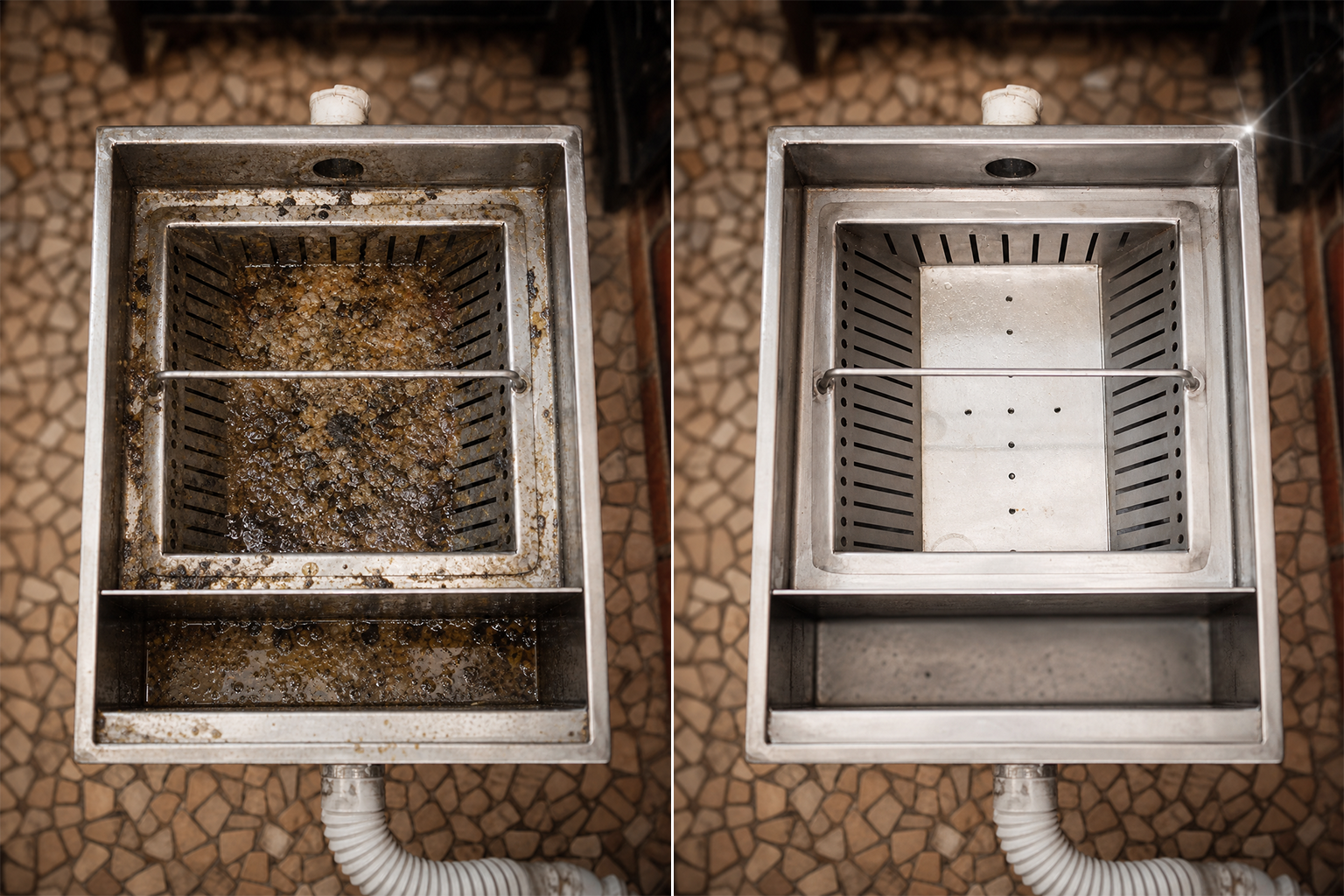
Instead of staying liquid and flowing through the trap, grease cools and begins to thicken and solidify much sooner. This causes:
-
Faster separation inside the grease trap
-
Quicker accumulation of solid waste
-
Reduced the usable capacity of the trap
In busy kitchens, this shift is immediate. The same amount of waste that flows relatively easily in summer starts settling and building up in winter, often without operators noticing until problems begin.
What Happens If You Don’t Adjust Your Cleaning Schedule
Many kitchens continue using the same cleaning schedule year-round. In winter, that approach often falls behind actual conditions.
When grease builds up faster than expected, you may start noticing:
-
Slower drainage and restricted flow
-
Persistent, unpleasant odours
-
Grease carries over into drainage systems
-
Increased risk of blockages and backups
-
Disruption to kitchen operations
These issues escalate quickly in colder conditions because grease solidifies before it can move through the system.
How Often Should You Clean Your Grease Trap in Winter?
There is no one-size-fits-all answer, because cleaning frequency depends on how quickly grease actually accumulates in your system. However, one principle remains consistent across the industry:
A grease trap should be cleaned before fats, oils, grease, and solids exceed roughly 25% of its capacity.
In winter, grease reaches that point much faster.
What This Means in Practice
As temperatures drop, many kitchens find that their usual cleaning schedule is no longer sufficient. Instead of relying on fixed time intervals, cleaning needs to be adjusted based on actual build-up.
In real-world operations, this often means:
-
Low-volume kitchens:
Monitoring more closely and cleaning more frequently than a typical monthly schedule if build-up increases -
Medium-volume kitchens (most restaurants):
Shortening intervals where needed, often moving from bi-weekly to more frequent servicing -
High-volume kitchens:
Requiring significantly shorter intervals, with servicing adjusted based on how quickly the trap reaches capacity
The exact timing will vary, but the pattern is consistent:
Winter reduces your margin for error.
The Key Shift
Winter requires a move away from fixed schedules and towards condition-based cleaning.
If your grease trap is reaching capacity before your next scheduled service, your current schedule is already too slow, regardless of what that schedule looks like on paper.
Signs You Need to Increase Cleaning Frequency Immediately
Even with a schedule in place, there are clear warning signs that your grease trap needs more frequent attention:
-
Water is draining more slowly than usual
-
The grease layer appears thicker than normal
-
Stronger odours are coming from drains
-
Gurgling sounds in the pipes
-
Wastewater levels inside the trap are higher than expected
If you notice any of these, it’s a strong indication that winter conditions are already affecting your system.
What We See On-Site in Winter
A common scenario we encounter involves restaurants that operate efficiently on a bi-weekly cleaning schedule during the summer.
Once winter starts, those same kitchens often begin experiencing slow drainage within 10–14 days after cleaning. By the time the next scheduled service arrives, the grease trap is already close to capacity.
In many cases, simply adjusting the cleaning approach, either by increasing frequency or monitoring more closely, resolves the issue completely. The system itself is not the problem; the schedule simply hasn’t adapted to seasonal conditions.
What a Blocked Grease Trap Can Cost Your Business
Delaying cleaning in winter doesn’t just create inconvenience; it can lead to real operational and financial consequences.
These may include:
-
Emergency call-out costs for urgent blockages
-
Lost revenue due to downtime or slowed service
-
Increased maintenance costs on drainage systems
-
Hygiene risks that can affect compliance
-
Potential fines or penalties in severe cases
Compared to these risks, proactively adjusting your cleaning schedule is a far more controlled and cost-effective approach.
How to Reduce Grease Build-Up in Winter
While more frequent cleaning is often necessary, there are also steps you can take to slow down grease accumulation:
-
Avoid pouring oils and fats directly down the drain
-
Use sink strainers to catch food solids
-
Train staff on proper grease disposal practices
-
Schedule regular inspections, not just cleanings
-
Keep an eye on how quickly your grease trap fills up
These small operational improvements can make a noticeable difference, particularly during colder months.
Why Gauteng Kitchens Need to Be Extra Careful
Winter in Gauteng may not be extreme, but temperatures are low enough to significantly affect grease behaviour.
When combined with consistent kitchen output, this creates ideal conditions for:
-
Faster grease solidification
-
Reduced trap efficiency
-
Unexpected system overload
This is why many kitchens experience issues “out of nowhere” during winter, when in reality, it’s a predictable seasonal shift.
Frequently Asked Questions
Can I clean my grease trap myself in winter?
Basic maintenance can be done in-house, but professional cleaning ensures that all waste is removed properly. In winter, when build-up is heavier, professional servicing is generally more reliable.
Does hot water help prevent grease build-up?
Hot water may temporarily move grease along, but it does not solve the problem. As it cools, the grease will still solidify further down the system.
What happens if a grease trap overflows?
Overflowing grease traps can lead to blockages, strong odours, and contamination of drainage systems. In commercial kitchens, this can also create hygiene and compliance risks.
Get a Cleaning Schedule That Actually Works
If your grease trap hasn’t been reassessed for winter, there’s a strong chance your current schedule is no longer effective.
A proper winter assessment should include:
-
Inspecting current grease levels
-
Evaluating how quickly the build-up occurs
-
Recommending a cleaning frequency based on real usage
-
Preventing issues before they disrupt operations
Don’t wait for a blockage to tell you there’s a problem.
Avoid costly blockages this winter, book your grease trap cleaning today.
