
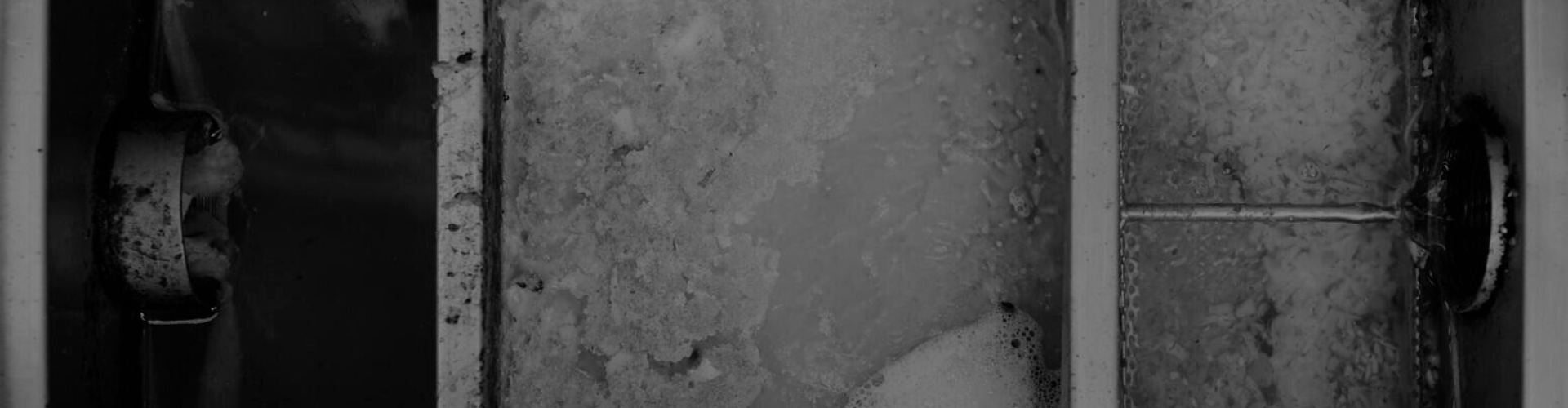
Check Your Grease Trap Before Gauteng’s Summer Rains
Check Your Grease Trap Before Gauteng’s Summer Rains
As Gauteng moves into the summer rain season, many businesses start preparing for wetter conditions, busier trading periods and year-end operational pressure. But one area that is often ignored until it becomes a problem is the grease trap.
A grease trap that is already full, smelly, slow-draining or overdue for cleaning will not become easier to manage once conditions become wetter, warmer or busier.
Rain does not cause grease trap build-up. Daily business activity does. Fats, oils, grease, food solids and wastewater accumulate inside the trap over time. But when a business enters the summer rain season with a grease trap that is already struggling, existing problems can become harder to manage.
For restaurants, cafés, hotels, bakeries, butcheries, canteens, commercial kitchens, catering companies, supermarkets, delis and food production facilities, this matters. These businesses rely on drainage, cleaning routines, wash-up areas and waste control every day.
At Green FOGS, we often see grease trap problems become urgent only after warning signs have already been present for some time. Before the season changes, Gauteng businesses should check whether their grease traps are clean, accessible and still keeping up with daily operations.
Why Seasonal Changes Should Trigger a Grease Trap Inspection
Seasonal change is a practical time to review maintenance routines.
Before the summer rain season begins properly, businesses should check whether their grease traps are already showing signs of strain. This includes slow drainage, bad odours, rising wastewater levels, visible grease build-up, overflow risks or traps that are filling faster than expected.
These are not small details. They are often early signs that the grease trap is overdue for cleaning or that the current cleaning frequency is no longer enough.
If your business has already noticed grease trap warning signs, the start of a new season is the right time to act before those signs become a blockage.
A grease trap inspection helps the business understand what is happening inside the system before it becomes urgent. It also gives managers, kitchen teams and facilities staff a chance to correct problems before wet conditions, increased trading activity or year-end pressure make daily operations more demanding.
Preventative maintenance gives the business more control than waiting for an emergency call-out.
What Warmer Weather Can Reveal About Grease Trap Odours
Odours are one of the most noticeable signs of a grease trap problem.
When grease, food solids and wastewater sit too long inside the trap, smells can begin to develop. These odours may become noticeable around drains, wash-up areas, sculleries, bin areas or grease trap access points.
Warmer weather can make odours harder to ignore. A smell that was mild before may become more obvious as conditions change, especially if the trap is already holding too much waste.
In many businesses, staff notice the smell before customers do. That should already be treated as a warning sign.
Odour is not only a smell problem. It often points to build-up inside the grease trap. If the source is not removed, the smell can return even after staff try to clean the surrounding area.
Professional grease trap cleaning helps remove the fats, oils, grease and food solids causing the odour, instead of only dealing with the smell after it has already spread through the working area.
Why Slow Drains Should Be Addressed Before Conditions Get Busier
Slow drains should not be ignored before a busy season.
In commercial kitchens and food-handling environments, slow drainage can affect prep sinks, wash-up areas, sculleries, floor drains and kitchen drainage points. Water may still move, but not as quickly as it should.
This often means wastewater is struggling to pass through the system efficiently. In many cases, the grease trap may already have reduced usable capacity because fats, oils, grease and solids have built up inside it.
If slow drains are already appearing before the summer rain season, the business should not wait for the issue to worsen.
As the year moves toward busier trading periods, kitchens may handle more food preparation, more cleaning, more wash-up activity and more wastewater. A grease trap that is already struggling may not keep up with the added pressure.
Slow drainage before seasonal demand increases is a clear reason to inspect and clean the trap.
How Rainy Conditions Can Make Existing Problems Harder to Manage
Rainy conditions do not create grease trap build-up. The build-up comes from daily business activity.
However, rainy conditions can make existing grease trap problems harder to manage if the trap is already full, smelly, overflowing or difficult to access.
Some grease traps are located outside or in service areas. If those areas become wet, muddy, blocked or difficult to reach, urgent cleaning becomes less convenient. If the grease trap is already close to capacity, waiting until wet conditions arrive can make the situation more stressful for staff and service teams.
The issue is not the rain itself. The issue is entering the season with a grease trap that has not been checked, cleaned or reviewed.
If the trap is already overdue for cleaning, wet conditions can make access, odours, overflow concerns and emergency response more difficult to manage. That is why preventative cleaning before the season changes is more practical than waiting until the problem becomes urgent.
Why External Grease Trap Areas Should Stay Accessible
Grease trap access is often overlooked until a cleaning team needs to reach the trap.
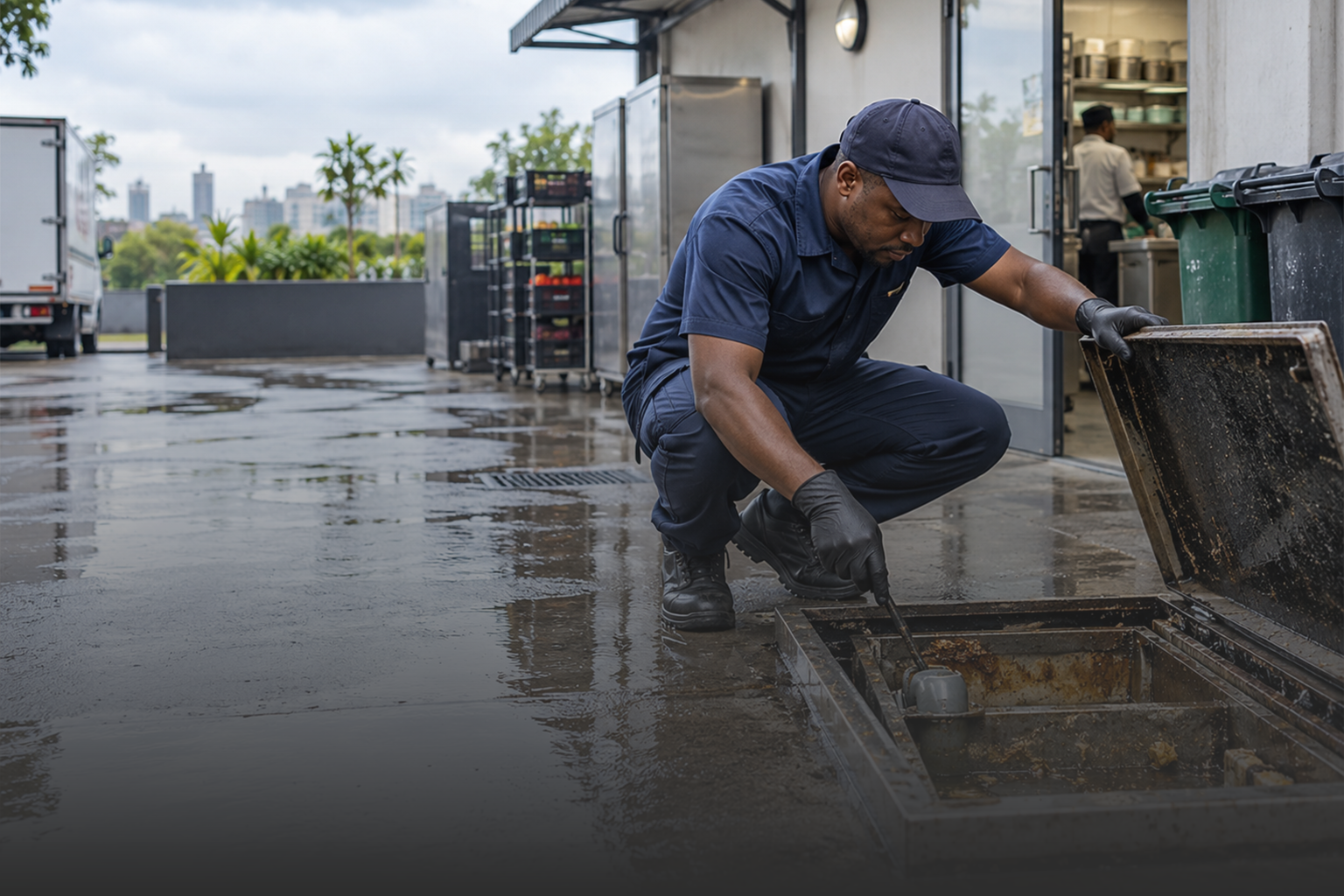
Before the summer rain season, businesses should make sure grease trap covers, service points and surrounding areas are clear and accessible. This is especially important for traps located outside, near waste areas, behind kitchens or in service zones.
Bins, stock, equipment, standing water, debris or blocked access points can slow down inspection and cleaning. In wet conditions, poor access can become even more inconvenient.
Staff should know where the grease trap is located and ensure the area remains clear. This helps professional cleaning teams work more efficiently and reduces delays when servicing is needed.
Good access does not solve grease build-up, but it makes maintenance easier to manage.
For Gauteng businesses that rely on regular cleaning and hygiene routines, grease trap accessibility should be part of seasonal maintenance planning.
Why Preventative Cleaning Is Better Than Emergency Cleaning
Emergency grease trap cleaning is usually more disruptive than planned maintenance.
By the time a business needs urgent support, the problem may already be affecting drainage, odours, staff routines or trading activity. A blocked or overflowing grease trap can interrupt cleaning, slow down wash-up areas and create unnecessary pressure during operating hours.
Preventative cleaning helps reduce the risk of:
-
blocked drains
-
strong odours
-
grease trap overflow
-
emergency call-outs
-
staff working around drainage problems
-
customer-facing hygiene concerns
-
disruption during trading hours
-
repeated maintenance issues
A planned cleaning gives the business more control. It can be scheduled before the trap reaches a problem point, before staff are forced to work around slow drains, and before odours or overflow concerns affect daily operations.
If your grease trap cleaning schedule has not been reviewed recently, the start of the summer rain season is a good time to check whether it is still suitable.
The cost of waiting is often higher than the cost of preparing.
How Green FOGS Helps Gauteng Businesses Prepare Their Grease Traps
Professional grease trap cleaning services help businesses remove the build-up that causes many common grease trap problems.
This includes built-up fats, oils, grease, food solids and wastewater residue that reduce trap capacity and restrict flow. Once the trap is cleaned properly, wastewater can move through more efficiently, odours can be reduced, and the risk of blockages or overflow can be lowered.
Green FOGS helps Gauteng businesses prepare before grease trap problems become urgent.
A professional service can also help identify whether the trap is filling faster than expected. If heavy build-up is found regularly, the business may need to adjust its cleaning frequency before seasonal demand increases.
The goal is not only to clean the grease trap once there is a problem. The goal is to help businesses stay ahead of problems before they disrupt operations.
For food-service and food-handling businesses, that preparation matters.
Prepare Your Grease Trap Before the Season Changes
If your grease trap is already slow-draining, smelling, filling quickly or overdue for cleaning, the summer rain season is not the time to wait and see what happens.
A full or neglected grease trap can quickly become harder to manage when conditions are wet, access is difficult, or business activity increases. Preventative cleaning gives your business more control before odours, overflows or blockages disrupt operations.
Green FOGS can help inspect your grease trap, remove built-up fats, oils, grease and solids, and make sure your cleaning schedule is ready for the season ahead.
Do not enter the rainy season with a full grease trap. Book a cleaning.
